
How to Source Ethical Gemstones for Your Jewelry Collection

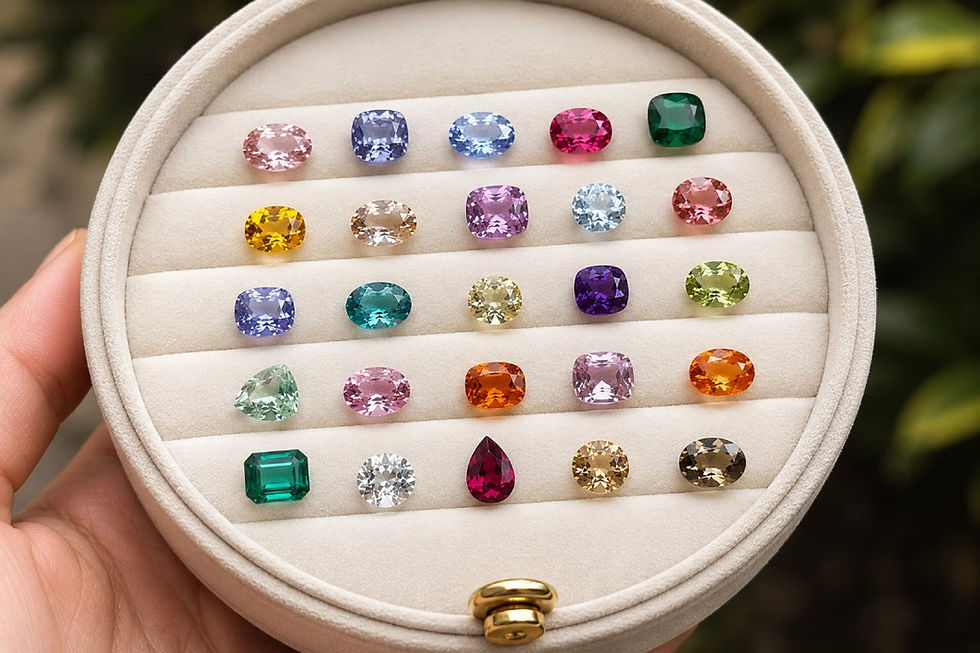
The gemstones in your jewelry carry more than beauty. They carry a provenance — a chain of events, decisions, and human labor that begins in a mine somewhere in the world and ends in a finished piece on your customer's finger, wrist, or neck. For a growing number of consumers and wholesale buyers, that provenance matters as much as the cut, clarity, and color of the stone itself.
Ethical gemstone sourcing is no longer a niche concern for activist brands. It is becoming a baseline expectation across the fine jewelry market — and for brands that get it right, it is a powerful differentiator that supports premium positioning, builds customer trust, and reduces reputational risk. For brands that ignore it, the exposure is growing as customers increasingly ask where their jewelry comes from and how it was made.
This guide explains what ethical gemstone sourcing means in practice, which certifications and standards matter, how to evaluate your manufacturing partner's sourcing practices, and how to communicate your sourcing values to your customers in a way that is honest and commercially effective.
What Does Ethical Gemstone Sourcing Actually Mean?
The term "ethical sourcing" is used broadly — and sometimes loosely — across the jewelry industry. Before you can source ethically or communicate your sourcing values credibly, you need to understand what the term actually covers.
Conflict-free gemstones
The most widely understood dimension of ethical gemstone sourcing is the conflict-free standard — ensuring that diamonds and colored stones have not been used to finance armed conflict or human rights abuses. The Kimberley Process Certification Scheme (KPCS), established in 2003, was created specifically to address the trade in conflict diamonds, requiring participating countries to certify that their diamond exports are conflict-free.
However, the Kimberley Process has significant limitations. Its definition of conflict diamonds is narrow — covering only stones financing rebel movements against recognized governments — and it does not address diamonds mined under abusive labor conditions, environmental destruction, or governance failures that fall outside this definition. A diamond can be Kimberley Process certified and still come from a mine with serious human rights or environmental issues. Understanding this gap is important for brands that want to make credible ethical sourcing claims.
Fair labor and mining community welfare
Beyond conflict, ethical sourcing encompasses the welfare of the people who mine gemstones — their safety, their pay, their working conditions, and the broader impact of mining on their communities. Artisanal and small-scale mining (ASM) — which accounts for a significant proportion of colored gemstone production globally — is often conducted in extremely difficult conditions, with limited regulation and inconsistent labor protections.
Brands that source from suppliers with verified fair labor practices — paying living wages, providing safe working conditions, and contributing meaningfully to local community development — are sourcing more ethically than those who rely on Kimberley Process certification alone.
Environmental impact
Mining is inherently disruptive to landscapes and ecosystems. Ethical sourcing in the environmental dimension means sourcing from operations that minimize ecological damage, rehabilitate mined land, manage water use responsibly, and operate with transparency about their environmental footprint. It also increasingly means considering the carbon intensity of mining operations and transportation.
Traceability and transparency
Increasingly, ethical sourcing is defined by traceability — the ability to follow a gemstone from mine to finished piece with documented evidence at each step. Full traceability is technically challenging and not yet achievable at scale for all gemstone types, but it is the direction the industry is moving. Brands that can offer even partial traceability — knowing the country of origin, the mine, or the specific supply chain — are better positioned than those who cannot.
The Key Certifications and Standards in Ethical Gemstone Sourcing
Navigating the certifications landscape in ethical gemstone sourcing can be confusing. Here are the standards that matter most and what they actually guarantee.
The Kimberley Process Certification Scheme (KPCS)
As discussed above, the KPCS is the baseline certification for conflict-free diamonds. It requires participating countries to certify that diamond exports have not been used to finance rebel movements. Most reputable diamond suppliers will be able to provide Kimberley Process documentation. However, given the scheme's limitations, KP certification alone is insufficient for brands that want to make strong ethical sourcing claims. It is a floor, not a ceiling.
Responsible Jewellery Council (RJC) certification
The Responsible Jewellery Council is the most comprehensive third-party certification body in the fine jewelry supply chain. RJC certification requires members — mines, traders, manufacturers, and retailers — to be audited against a Code of Practices that covers human rights, labor rights, environmental impact, business ethics, and product disclosure. RJC member status signals a meaningful commitment to responsible sourcing practices across the supply chain.
At Erawan Atelier, we work within a supply chain that prioritizes RJC-aligned sourcing practices, allowing our clients to source with confidence. Our article on ethical jewelry certifications provides a full breakdown of the certifications that matter most to today's jewelry brands and their customers.
Fairmined and Fairtrade gold and gemstones
The Fairmined and Fairtrade certification programs work specifically with artisanal and small-scale mining communities, verifying that miners receive fair prices for their materials, work in safe conditions, and operate with environmental responsibility. Fairmined gold is the most developed program in this category, but colored gemstone certification programs are growing. For brands that want to source directly from artisanal mining communities with verified fair trade practices, these certifications represent the gold standard.
GIA origin reports and gemstone traceability programs
The Gemological Institute of America offers origin determination reports for certain colored gemstones — ruby, sapphire, emerald, and alexandrite among others — based on gemological analysis. While GIA origin reports identify the likely geographic origin of a stone, they do not verify the ethical conditions of its mining. They are a useful component of a traceability story but should not be conflated with ethical sourcing certification. Our article on what the GIA is and does provides a clear overview of what GIA documentation covers and where its scope ends.
Provenance claims and blockchain traceability
A growing number of companies are using blockchain technology to create immutable records of gemstone provenance — logging each step of a stone's journey from mine to market on a distributed ledger that cannot be altered. Programs like Tracr (developed by De Beers for diamonds) and Gübelin's Provenance Proof for colored gemstones represent the frontier of traceability technology. While not yet mainstream, these programs are growing in relevance and will increasingly be expected by transparency-conscious buyers.
How to Evaluate Your Manufacturer's Gemstone Sourcing Practices
Your manufacturer is the most important partner in your ethical sourcing strategy. The gemstones in your collection are typically sourced through or with the guidance of your manufacturing partner — which means their sourcing practices directly determine the provenance of your stones.
Ask the right questions before you commit
Before entering a manufacturing relationship, ask your prospective partner directly about their gemstone sourcing practices. Specifically: Where do they source their diamonds and colored stones? Which suppliers do they work with? What certifications can they provide? Can they trace individual stones back to their country of origin? How do they verify the ethical practices of their suppliers?
A manufacturer who cannot answer these questions clearly — or who becomes evasive when asked — is a sourcing risk. A manufacturer who can provide detailed, documented answers and who actively monitors their supply chain is a genuine ethical sourcing partner. Our guide on how to choose the right jewelry manufacturer for your brand includes a full set of evaluation criteria that covers sourcing practices alongside technical and commercial factors.
Understand the difference between direct sourcing and broker sourcing
Many jewelry manufacturers source their gemstones through brokers or trading intermediaries rather than directly from mines or cutters. This is common and not inherently problematic — experienced gem traders often have deeper relationships with specific mining regions and can source stones of a quality and specificity that direct sourcing cannot match. However, broker sourcing adds steps to the supply chain that can reduce traceability. Ask your manufacturer whether they source directly or through intermediaries, and what visibility they have into their brokers' own sourcing practices.
Visit the production facility when possible
There is no substitute for visiting your manufacturer's facility and meeting the people responsible for sourcing and quality control. A factory visit gives you direct visibility into the environment in which your pieces are made and allows you to ask sourcing questions in person — where the body language of the answers is as informative as the answers themselves. If a factory visit is not possible, request a detailed sourcing documentation package and ask for video calls with the relevant team members.
At Erawan Atelier, we welcome client visits to our Bangkok facility and are fully transparent about our sourcing relationships, our supplier network, and the documentation we can provide for each gemstone category. If you are planning a visit, contact us through our contact page to arrange a tour.
Ethical Sourcing by Gemstone Type
Different gemstone categories present different ethical sourcing challenges and opportunities. Here is a practical overview of the most common fine jewelry gemstones and what ethical sourcing looks like for each.
Diamonds
Diamonds are the most regulated gemstone category, with the Kimberley Process providing a baseline certification framework. For brands that want to go beyond KP certification, the options include lab-grown diamonds — which eliminate mining entirely and offer full transparency on origin — and diamonds from producers with verified responsible mining practices, such as Canadian diamonds from RJC-certified operations.
Lab-grown diamonds have grown significantly in commercial relevance and are now a credible choice across a wide range of jewelry categories. They offer complete traceability, a significantly lower environmental footprint than mined diamonds, and price points that allow brands to offer larger stones at accessible price points. They do not, however, carry the rarity premium of natural diamonds — a distinction that remains commercially meaningful in certain market segments.
Sapphires and rubies
Sri Lanka (Ceylon), Madagascar, and Montana are among the most reputable sapphire origins from an ethical sourcing perspective, with established supply chains and relatively good regulatory frameworks. Burma (Myanmar) sapphires and rubies present significant ethical concerns given the country's political situation and the military's involvement in the gem trade — many responsible brands have committed to avoiding Burmese stones entirely. Ask your manufacturer specifically about the origin of their sapphire and ruby supply and whether they can document country of origin.
Emeralds
Colombia is the world's most important emerald producer and the source of the most commercially desirable stones. Ethical sourcing in Colombian emeralds has improved significantly over the past two decades, with organizations like the Muzo International mine actively seeking RJC certification and transparency. Zambian emeralds from the Kagem mine — the world's largest — are produced under verifiable ethical conditions and represent a strong alternative for brands prioritizing traceability.
Colored gemstones from Thailand
Thailand is not only a manufacturing hub but one of the world's most important gemstone trading centers — particularly for sapphires, rubies, and a range of other colored stones sourced from across Southeast Asia and Africa. Bangkok's Gemopolis and Chanthaburi gem markets are globally recognized centers of expertise. Working with a Bangkok-based manufacturer like Erawan Atelier gives brands direct access to experienced gem traders with deep regional knowledge and established sourcing relationships. Our article on why Bangkok is the world's leading jewelry manufacturing hub explains the full scope of Thailand's role in the global gem and jewelry supply chain.
How to Communicate Your Ethical Sourcing to Customers
Sourcing ethically is only half the equation. Communicating it credibly — without overstating your claims or making promises you cannot substantiate — is the other half.
Be specific and honest
The most damaging thing a brand can do in ethical sourcing communication is make vague, unverifiable claims — "sustainably sourced," "ethically made" — without the documentation to back them up. Customers and journalists who investigate these claims and find them unsubstantiated cause significant reputational damage. Be specific about what you can actually verify — the certification schemes your supplier participates in, the countries of origin you can document, the practices you can evidence — and honest about the limits of your current traceability.
Tell the story behind the stone
Where you have genuine provenance information — a specific mine, a verified origin, a named supplier with documented practices — use it in your product storytelling. A sapphire described as coming from a specific Sri Lankan village, sourced through a supplier with verified fair labor practices, is a far more compelling product story than a generic "ethically sourced sapphire." This specificity is both more credible and more emotionally resonant for customers who care about provenance.
Show your progress over time
Ethical sourcing is a journey, not a destination — and customers increasingly respect brands that are transparent about where they are on that journey rather than claiming a perfection they have not yet achieved. Sharing your sourcing goals, the steps you are taking to improve traceability, and the challenges you are navigating is a more authentic and ultimately more credible communication strategy than a polished but hollow ethical sourcing statement.
Frequently Asked Questions
What does conflict-free gemstone mean?
A conflict-free gemstone is one that has not been used to finance armed conflict or human rights abuses. For diamonds, the Kimberley Process Certification Scheme provides a baseline standard for conflict-free verification. However, the KP definition is narrow and does not cover all forms of human rights abuse or environmental damage associated with mining. Brands that want to make credible conflict-free claims should look beyond KP certification to additional standards such as RJC membership and verified fair labor practices.
Are lab-grown diamonds more ethical than natural diamonds?
Lab-grown diamonds eliminate the environmental and human rights risks associated with mining and offer complete traceability on their origin. In these respects, they are generally considered more ethical than mined diamonds. However, they require significant energy to produce — the carbon footprint of lab-grown diamonds varies considerably depending on the energy source used in their production. Natural diamonds from certified responsible mining operations can also be produced to high ethical standards. The right choice depends on your brand values, your customer expectations, and the specific claims you want to make.
How can I verify that my gemstones are ethically sourced?
Verification relies on documentation — certificates from recognized bodies such as the Kimberley Process, RJC audit reports, Fairmined or Fairtrade certification, and GIA origin reports where relevant. Ask your manufacturer or supplier to provide documentation for each gemstone category in your collection, and verify that the certifications cited are current and issued by the bodies they claim. Where documentation is incomplete, acknowledge the gap honestly rather than making claims you cannot substantiate.
What is the Responsible Jewellery Council and why does it matter?
The Responsible Jewellery Council is an international standards and certification organization for the jewelry supply chain. RJC membership requires third-party auditing against a Code of Practices covering human rights, labor rights, environmental management, business ethics, and product disclosure. RJC certification is currently the most comprehensive ethical sourcing standard available across the full jewelry supply chain and is increasingly required by major retailers as a baseline for their supplier relationships. Our article on ethical jewelry certifications explains the full scope of RJC certification and how it compares to other standards.
Does where I manufacture affect my ethical sourcing story?
Yes, significantly. Your manufacturer's location, their supplier relationships, and their own ethical commitments directly determine the sourcing story you can tell. A manufacturer based in a major gemstone trading hub — like Bangkok — with established relationships with verified suppliers is in a fundamentally better position to support ethical sourcing than one with opaque or undocumented supply chains. Choosing the right manufacturing partner is therefore one of the most important decisions in building a credible ethical sourcing strategy.


Comments